

Re-learning Ease

“Ease” has a bit of a reputation problem.
For many of us, it’s been quietly filed away as something suspicious—something that means we’re slacking, avoiding, or not trying hard enough. If something feels easy, we question it. If something feels effortful, we trust it. We feel like we’ve earned something if we’ve had to work hard to achieve it. As a result, we hustle to earn rest. We hustle to earn love. We hustle to earn our worthiness.
Somewhere along the way, effort became synonymous with value.
But what if that’s not actually how we’re designed to work?
What if ease isn’t the reward at the end of doing everything “right”… but a signal that your system is organizing in a more intelligent way? What if EASY has been the pathway all along?
Why we default to effort
There’s a very real reason we tend to track what’s uncomfortable.
Your nervous system is built to scan for problems. It’s constantly asking: What’s off? What needs attention? What might be a threat? That bias is what’s kept humans alive.
Layer on top of that systems of power and oppression that have created a culture that rewards pushing, striving, and overriding your own signals—and it’s not surprising that most of us have become highly skilled at noticing tension, discomfort, and what isn’t working.
You can see this everywhere:
In your body, as chronic tension, headaches, back pain, neck pain, bracing or holding or trying a little too hard to “get it right.”
In your thoughts, as looping, second-guessing, or self-critique spiraling into anxiety.
In your relationships, as care-taking, codependence, over-giving, or trying to manage everyone else’s feelings and experience, tying yourself into knots in the meantime.
None of this is a personal failure. It’s a pattern.
But it’s also not the only way your system knows how to operate.
Attention is not neutral
One of the most important shifts in this work is understanding that attention is not passive.
You’re not just experiencing reality—you’re selecting from it.
At any given moment, there are multiple streams of information available. In fact, the human perceives upward of 11 million bits of information each second. Our conscious mind can handle only 40 to 50 bits of information a second. As a result, we create patterned ways of sorting through it all - aka habitual ways of paying attention. And 80% (or more) of the conscious thoughts you think are driven to the mind from the body. Your body knows first! So we track:
Sensations that feel tense or uncomfortable
Sensations that feel neutral
Sensations that feel supportive, pleasant, or easeful
Most people have been trained—explicitly or implicitly—to track the first category almost exclusively.
So when we talk about “shifting toward ease,” this isn’t about pretending discomfort doesn’t exist.
It’s about expanding your awareness to include more of what’s already here. It’s about shiftign your habitual ways of navigating the world around you, and giving you more choice, more freedom, and ultimately, more joy, pleasure, and ease.
The practice of noticing ease
This is where things get deceptively simple.
Instead of asking, “What’s wrong?” you begin to ask, “What is already working—even a little?”
That might look like:
A breath that drops slightly deeper without you forcing it
A place in your body that feels supported or neutral
A moment of connection that didn’t require you to try so hard
These are small moments. Easy to overlook.
But they matter because they interrupt a much larger pattern—one that spans how you move, how you think, how you feel, and how you relate.
When you include ease in your awareness, you’re giving your nervous system new information to organize around.
Ease is not the opposite of growth
There’s a common fear here:
If I focus on ease, won’t I lose my edge? Won’t I stop growing?
In reality, the opposite tends to be true.
When your nervous system feels safe enough, it naturally begins to organize toward efficiency. It looks for ways to do things with less unnecessary effort. This is your innate wisdom at work. It is your birthright.
Ease and even pleasure become signals that something is integrating—that learning is happening.
This is the difference between forcing change and allowing change. This is the difference between staying the same and staying stuck, and allowing yourself to grow into more and more of your human potential.
Force can create short-term results, but it often comes with compensation, strain, and burnout.
Ease creates conditions where change can integrate, and actually last.
Holding both: ease and discomfort
This isn’t about only focusing on what feels good. No one is telling you to put your head in the sand. When the world is on fire, we need to stay aware. We need to know what’s happening in the collective to protect our people.
It’s about increasing your capacity to hold more than one thing at a time.
To notice discomfort without collapsing into it. To notice fear without becoming paralyzed. To stay connected to a sense of support, even while something feels challenging.
That’s where choice starts to emerge.
Instead of reacting automatically, you begin to respond with more flexibility. And that flexibility is what allows new patterns to form. It allow us to maintain allostasis - the ability to respond, and come back to a regulated state without shutting down. It keeps our nervous systems nimble. And THAT is what a healthy nervous system can do, and what we all need to be building and maintaining, especially right now.
What this looks like in real life
This shift shows up in very tangible ways:
In movement, you might notice where you’re over-efforting and allow something to be simpler.
In your voice, sound begins to emerge rather than being pushed.
In relationships, you experiment with not doing quite so much—and noticing what happens.
In your inner dialogue, there’s a little less urgency to fix and a little more curiosity about what’s already here.
None of this happens all at once.
But it starts to accumulate.
A place to begin
You don’t need a big overhaul to start working with this.
You just need a moment of attention.
Pause, wherever you are, and ask:
Where do I feel even a small amount of ease, support, or neutrality right now?
Let your attention rest there for a few breaths.
Not trying to change it.
Not trying to make it bigger.
Just noticing.
That’s it.
It’s a small shift—but it’s also a meaningful one.
Because this is how you begin to retrain your system to recognize that ease is not something foreign or far away. It’s how we start to rewire our brains.
It’s already part of your experience.
Reclaiming ease
Ease isn’t something you earn after enough effort.
It’s not a luxury, and it’s not a sign that you’re doing less than you should.
It’s a reflection of how your system is designed to function when it has what it needs.
And when you begin to notice it—even in small ways—you create the conditions for something else to emerge:
More adaptability.
More creativity.
More of YOU.
And my love, right now YOU are what this world desperately needs more of.
xo,
Sharon
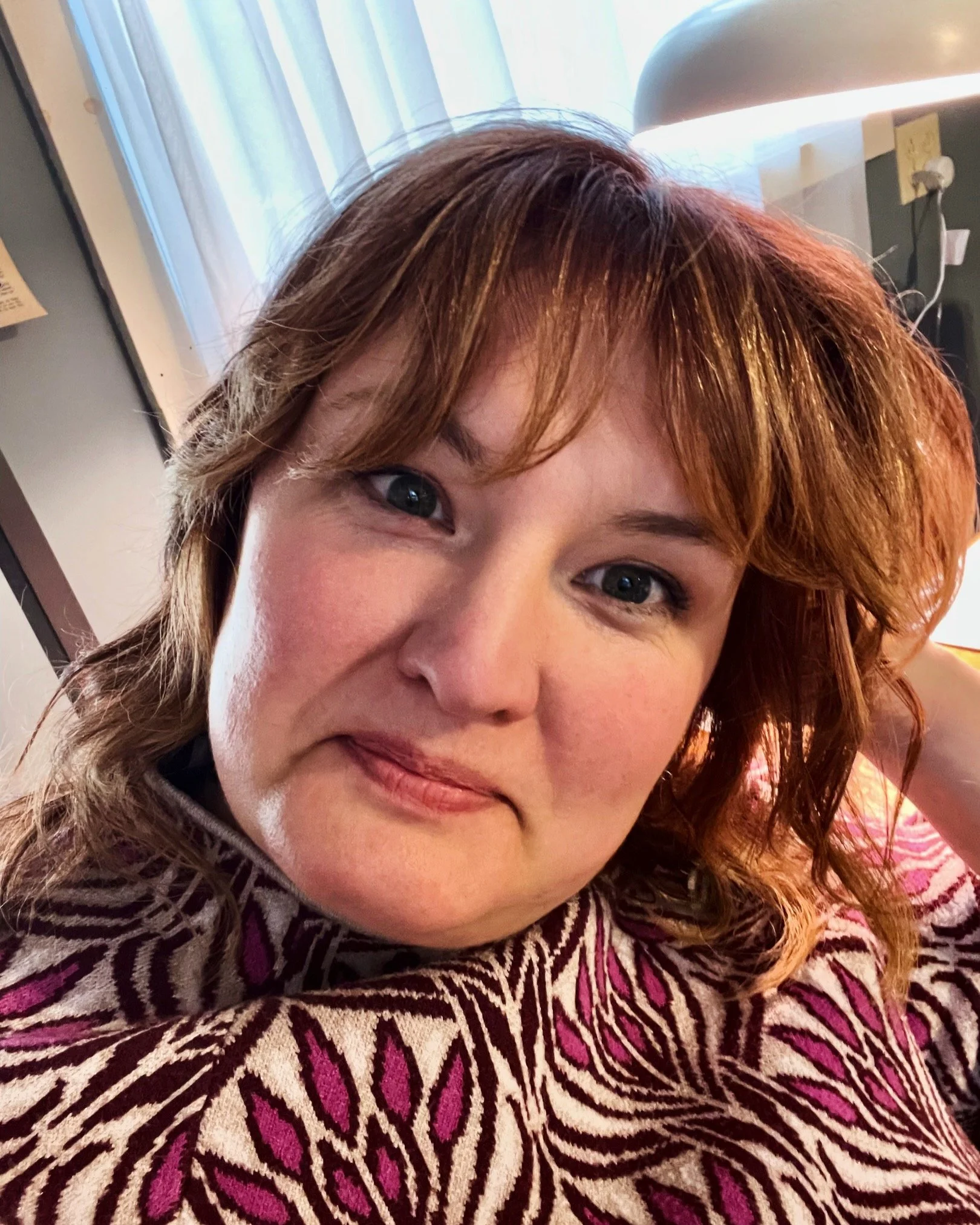
If something in you softened or resonated as you read this, I’d love to work with you.
There are a few ways to step in—through movement, voice, or hands-on support.
You don’t have to figure it all out first.
You just have to begin somewhere.